This story is the continuation of Part 1.
Marketing Was My Weakest Point
The hardest part of building Cyango was not the product. It was explaining why anyone should care before the demo even started.
That became my recurring pain for years. The platform generated visual, interactive, immersive experiences. It looked good in motion. It felt good when someone explored it. But that also meant I was constantly dependent on showing it. I always needed a video, a live demo, a walkthrough, something. A normal pitch deck never felt like enough.
And even with the video, it still was not enough.
That was the part that hurt my ego the most. We were building something that, in my head, was obviously exciting. XR, spatial experiences, 3D environments, editing tools, publishing workflows. I thought the product would carry itself if we just made it good enough.
I took that idea way too seriously.
At some point I started treating marketing like a technical problem I could brute force.
So I did what many first-time founders do when they realize they are weak at something: I overcompensated.
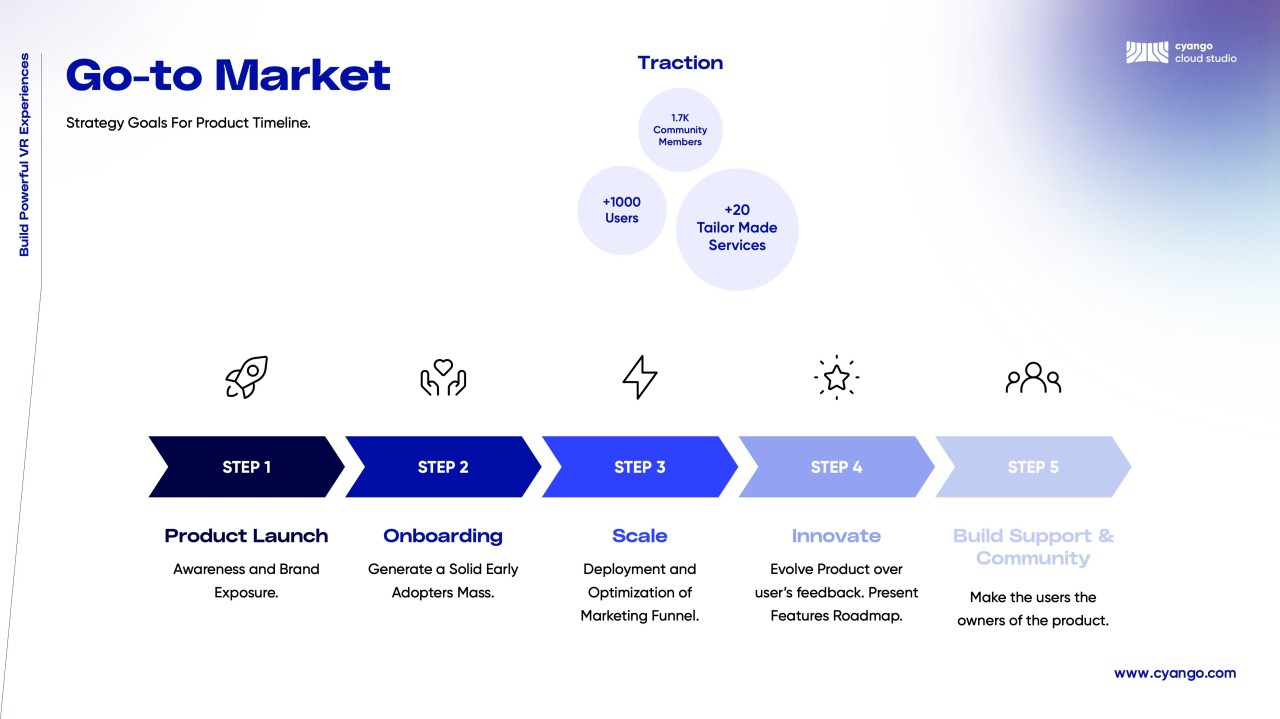
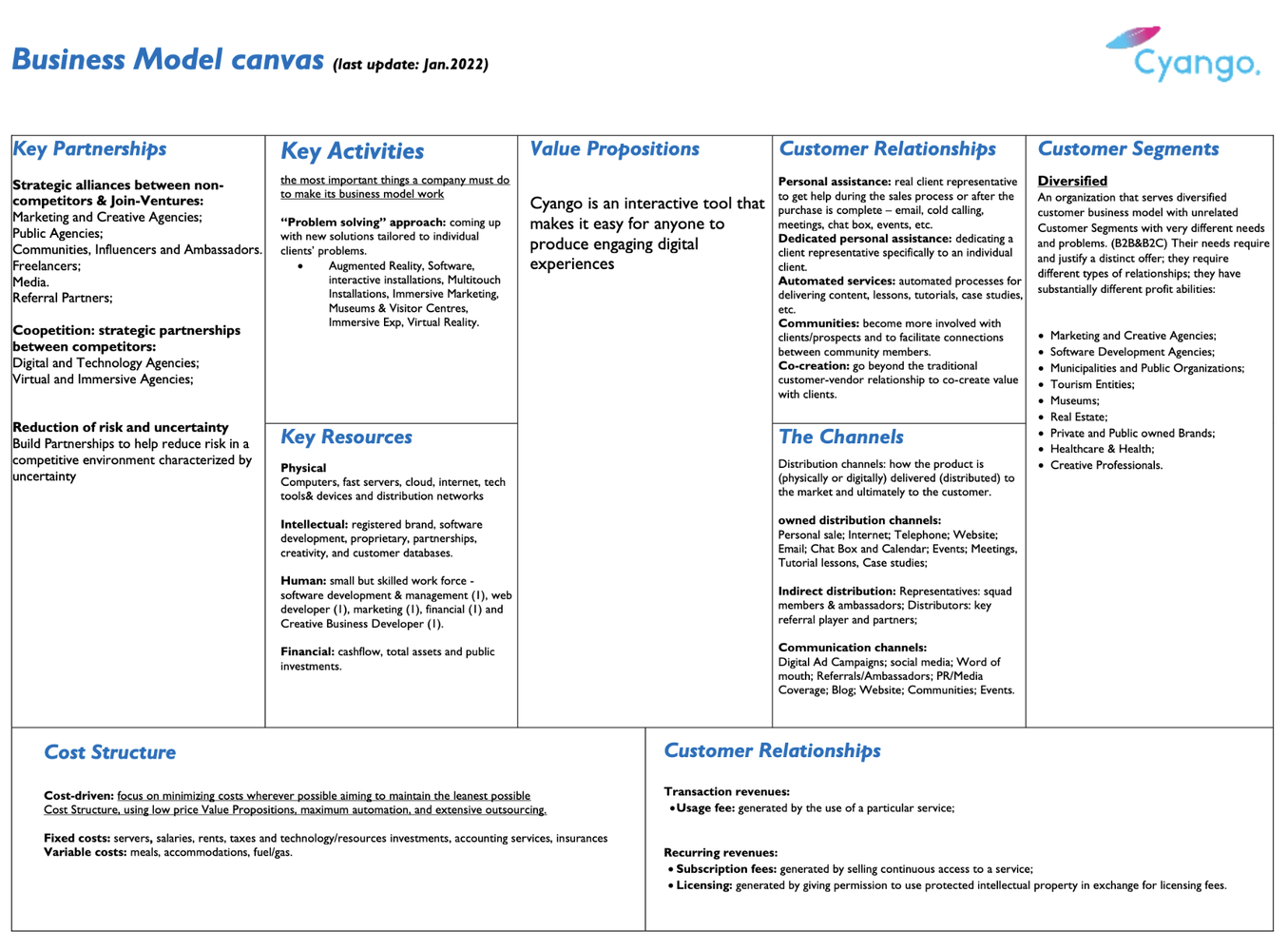
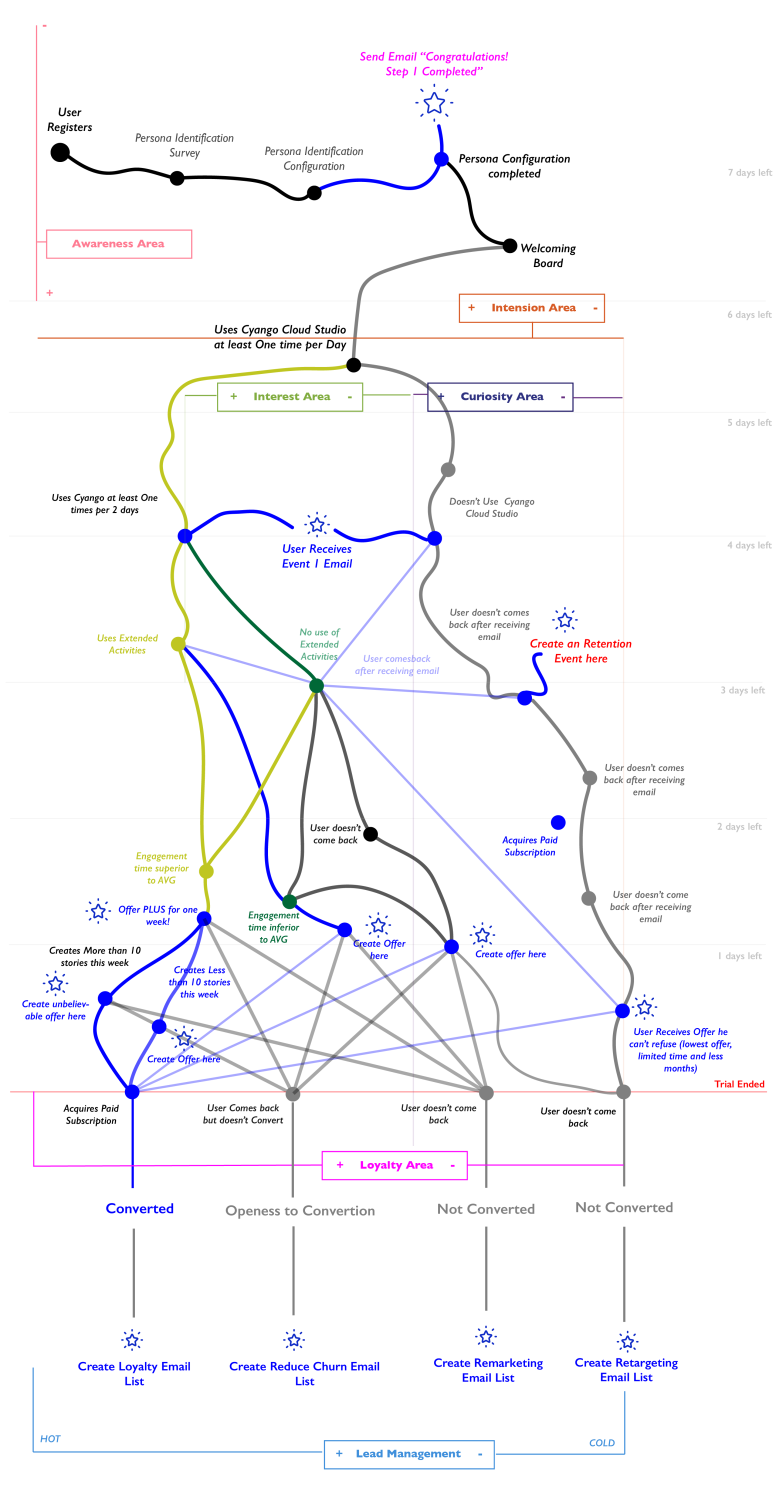
I hired marketers. I made marketing plans. I filled business canvases. I did PEST analysis, Porter analysis, SWOT analysis, operational strategy, goals strategy, KPIs, funnels, TOFU, MOFU, ads. If there was a framework, I probably tried it. If you're thinking this was a bad idea, you're right.
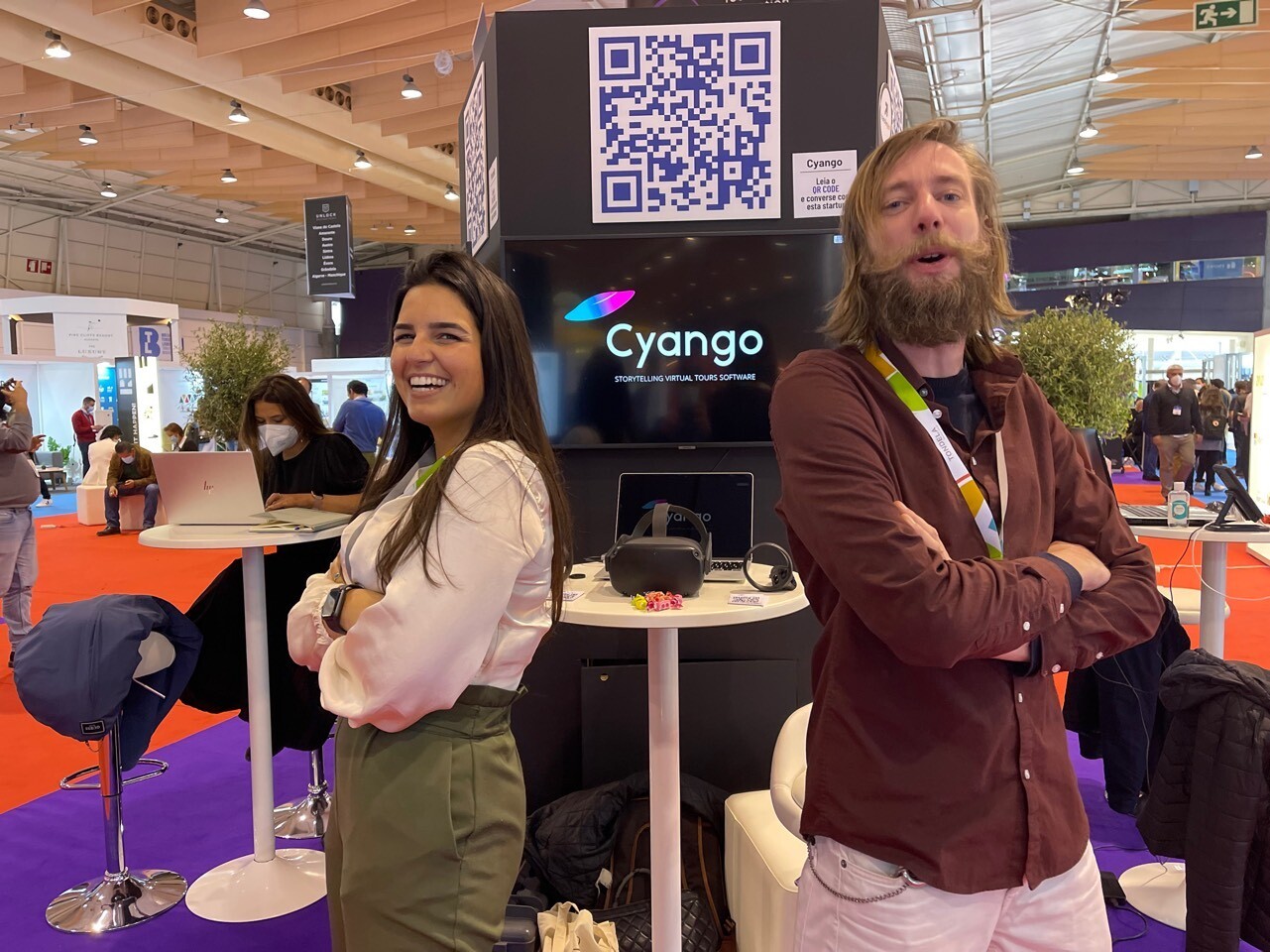
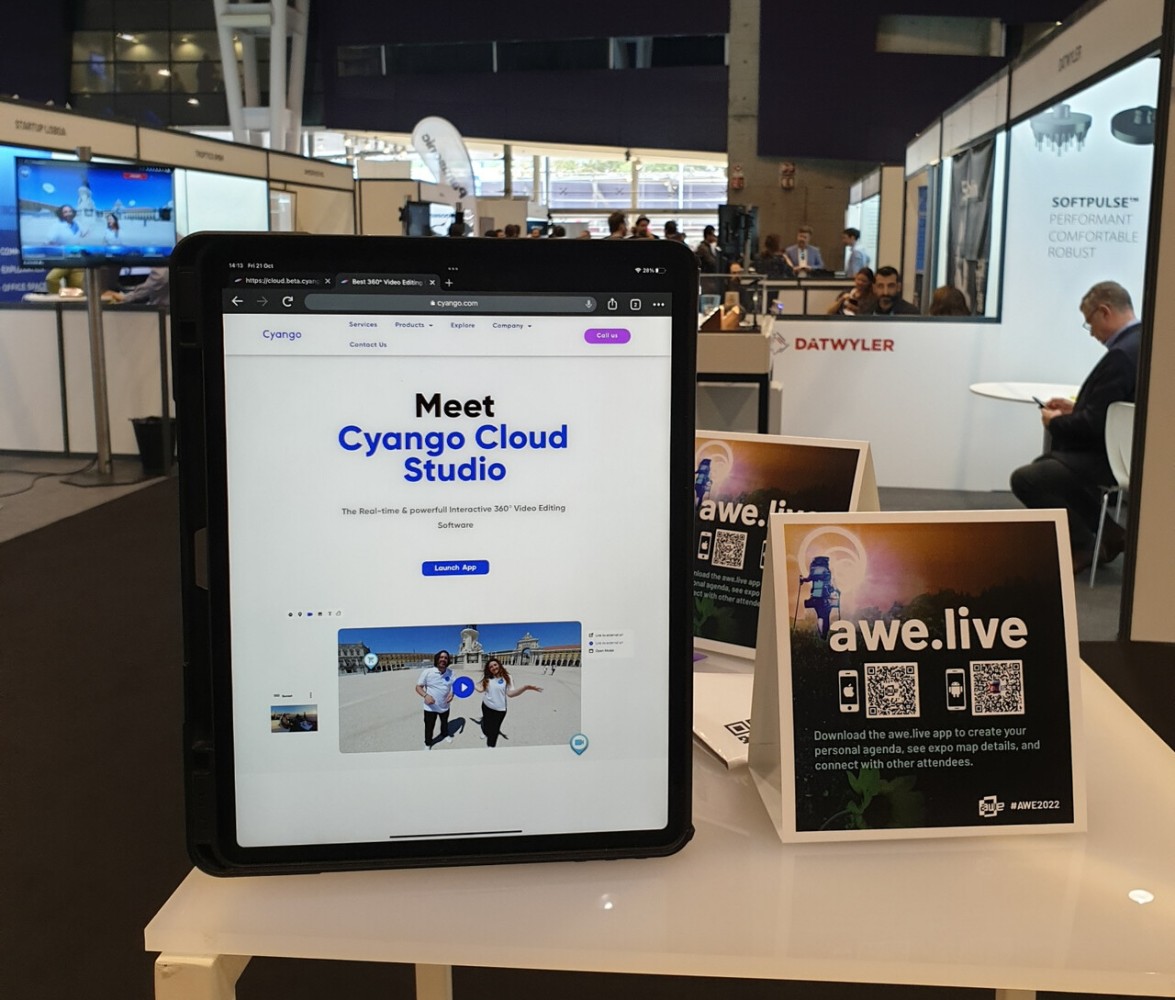
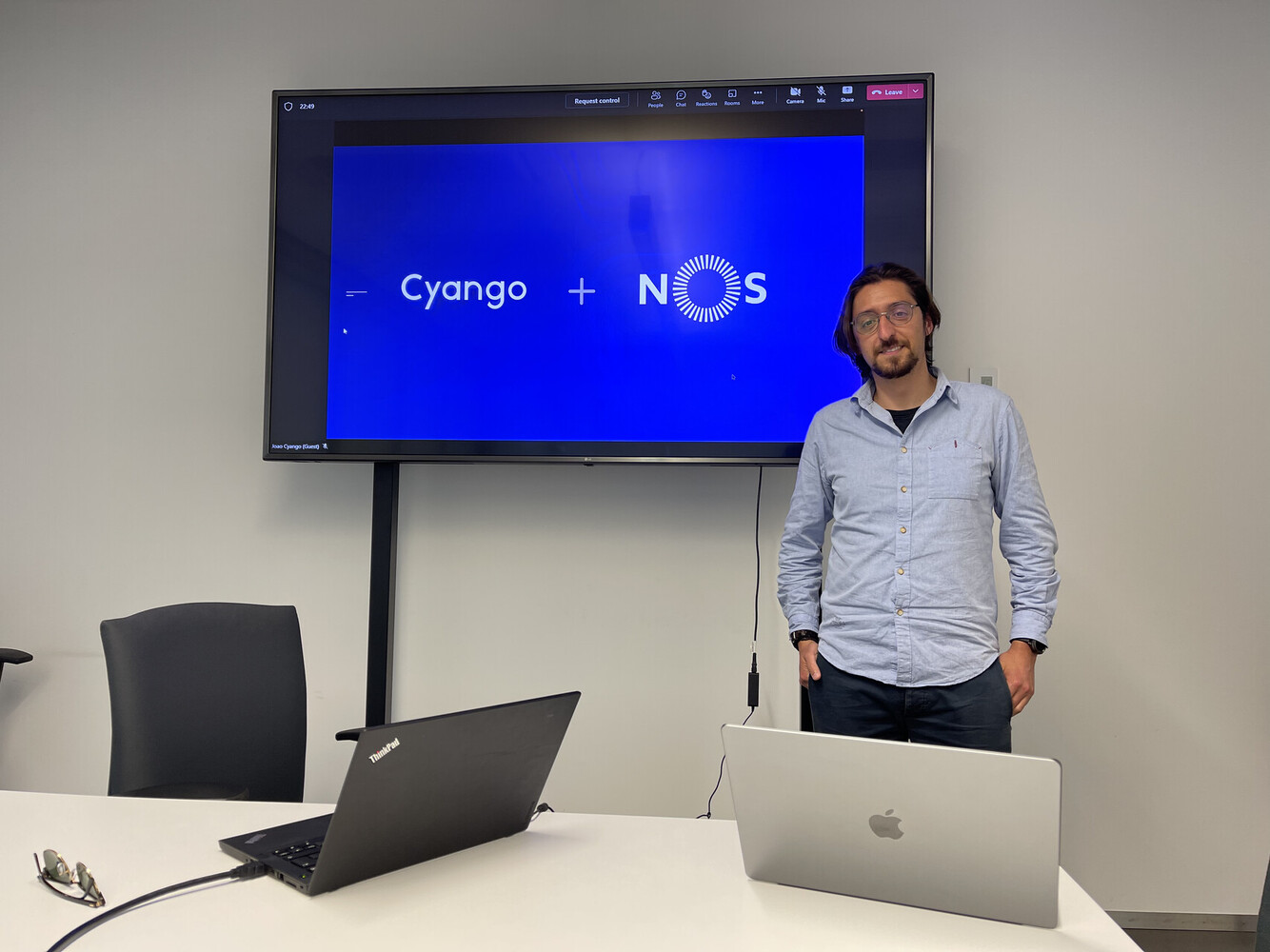
From the outside, it looked like progress. We were speaking on national TV. We were going to events. We were getting attention. We were doing paid pilot projects with companies that genuinely liked what we were building. We were present at BTL. We went to AWE. We were out there.
But attention and traction are cousins, not twins.
The real problem was simpler and more annoying: we did not have enough paying users, and I did not know how to fix that. So instead, I tried to fix it with activity.
We were going to every possible event hoping one more meeting would turn into survival. We were closing pilots, not building a reliable engine. We were always close enough to stay alive and far enough from stability to stay stressed.
That kind of phase can fool you for a long time, because it does not feel like failure. It feels like hustle.
Then we spent money on ads. Another failure.
The issue was not only that the ads were bad. The issue was that our communication was too wide because the product itself was too wide. Cyango could make sense for real estate, tourism, museums, education, branded experiences, and a few other use cases depending on the week and on who I was talking to. That sounds like flexibility. In practice, it was blurry positioning.
We were attracting leads from very different verticals, but our software did not resonate deeply with any of them in a sharp enough way. We were interesting to many people and necessary to almost nobody. That distinction is brutal when you're bootstrapped.
I kept believing that if we just learned more about users, the answer would reveal itself. So we had what looked like another brilliant idea: build a full user analytics admin dashboard directly into the platform. Add onboarding flows. Add offboarding flows. Track behavior. Learn from the funnel. Understand the customer better.
This was still before the AI age, so everything felt slower, heavier, more manual. We spent almost half a year building a proper analytics and onboarding system inside the product.
I still regret this.
Not because analytics are useless. They are not. I regret the timing, the weight of it, and the illusion behind it. We had leads coming in, but instead of becoming more direct, we drowned ourselves in process. I was trying to create certainty because I did not have clarity.
That is one of the easiest traps for a founder with a technical brain: when the market is fuzzy, build internal systems. It feels intelligent. It feels responsible. It also can quietly kill your momentum.
My leadership failed there.
We did not need more dashboards. We needed a narrower problem, better positioning, and the courage to say no to everything else.
Keeping the Company Alive While Splitting It in Two
Those years were intense for another reason.
Cyango was not the only thing I was running. In parallel, I had Dotesfera, our VR/AR agency. So while we were trying to build a product company, I was also doing and managing client projects across other stacks, other deadlines, other expectations. It was overwhelming.
One week we were deep in Cyango. The next week we were pulled into agency work because a project landed and the cash was needed. Then back to Cyango. Then back to client work again. Context switching became part of the company culture, which is a terrible culture to have when you're trying to build a product.
The irony is that Dotesfera was also the reason Cyango stayed alive.
I was bootstrapping Cyango with agency revenue. We would make money from services, and I would pour that money, time, and energy back into the product. That sounds noble when you say it fast. Living it is messier. You are constantly robbing focus from one thing to feed the other. I was breaking my own focus. Worse, I was breaking the team's focus too.
And if you're leading a small team, your confusion spreads faster than your confidence. They can feel when the company is zigzagging, even if you try to package it as strategy.
Eventually I made one of the hardest decisions of that period. I let go of the agency services. I let go of Dotesfera.
I made the bet that Cyango had to become profitable. Profitable enough to sustain me, sustain the team, and justify all the years we had already poured into it. So we went all in.
This was 2022.
A funny detail is that the same year I went all in on Cyango was also the year I got my girlfriend after being single for three years. So yes, it was a very emotional year. Totally normal. Nothing intense happening at all 🫠
It was one of those periods where life decides to ship multiple major updates at once.
On one side, I was making a professional bet that could either finally unlock the company or sink it faster. On the other, my personal life got lighter, warmer, more grounded. I needed that balance more than I admitted at the time.
Because once we went all in, there was nowhere to hide. No agency revenue to soften bad product decisions. No services business to cover strategic confusion. Every weak point in Cyango became more visible. Including mine.
Branding, UI, and My Obsession With Simplicity
Then came 2023, the year we invested in a new brand.
At that point, my designer was also acting as my marketer, and she needed better material to work with. The company needed stronger visual consistency, better positioning assets, and honestly, something that looked like it belonged to the ambition I had in my head.
So we hired a freelance designer. Around 5k for a complete branding renewal. For us, that was real money.
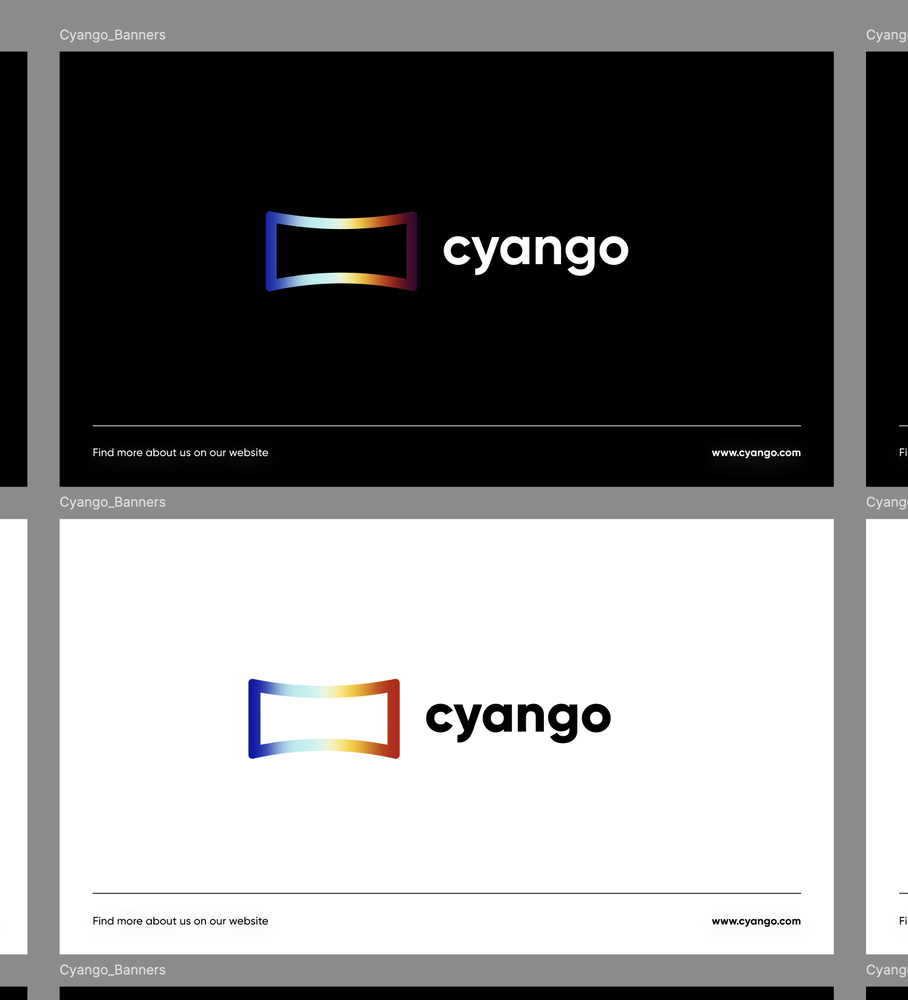
After three proposals, we landed on the branding that became the current Cyango identity.
A month later, our team got an excellent new designer, and that changed a lot. She was reliable, sharp, and immediately improved the platform's UI and UX. Once that happened, our iteration speed increased. And that was good. It was also dangerous.
Because I became obsessed.
I kept looking at similar platforms and noticing the same pattern: dark themes, technical panels everywhere, endless properties, interfaces that looked like they were designed to remind you how powerful they were. That was never my vision.
I wanted Cyango to feel accessible. Clean. Intuitive. Not intimidating.
It had to be white. All white. As white as possible.
That became almost philosophical for me. I wanted a WebXR editor that did not feel like a cockpit. Something that invited people in instead of warning them they needed a technical background first.
There was something right in that vision. I still believe that.
But there was also ego in it. A lot of founder identity got mixed into product decisions. I was no longer just asking, "What helps the customer succeed?" I was also asking, "What feels like the future to me?"
Those two questions overlap sometimes. They are not the same question.
Iterating So Fast We Broke Our Own Story
We kept iterating the UI and UX so much that our own tutorials got deprecated a few weeks after being published. Can you imagine?
We were producing content to explain the platform while simultaneously changing the platform fast enough to invalidate the content. That is what I like to call product turbulence.
And while all of this was happening, we still had client projects in production that needed migrations, refactors, bug fixes, and emergency attention. Some days it felt like the whole company was just moving bugs from one place to another while pretending this was momentum.

Every day I found something broken. Every day I fixed something. Which, to be fair, is a pretty accurate summary of my life as a programmer.
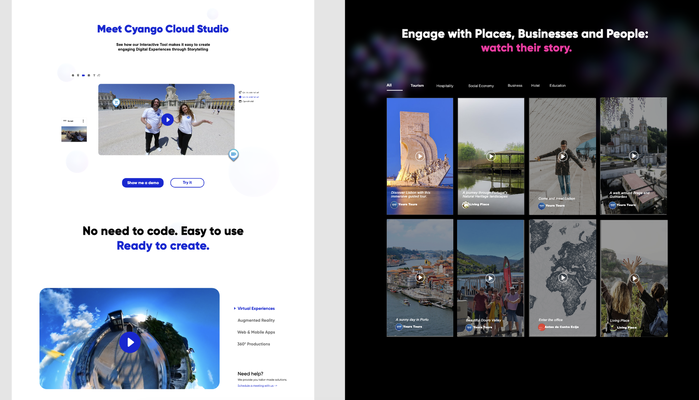
The website followed the same pattern. We changed the design and codebase more times than I can count. There was always one more thing to improve, one more page to rethink, one more feature to surface.
We hosted WordPress on my own server for a while. Nightmare. Then we migrated to Webflow. Later we moved back toward pure code again because new tools made that easier and faster.
I guess I was having too much fun 😂 And that sentence is only half a joke.
One of the most confusing things about building a product is that you can be deeply alive inside the wrong direction. You can be learning, shipping, fixing, improving, designing, and still missing the point.
The Pricing That Never Landed
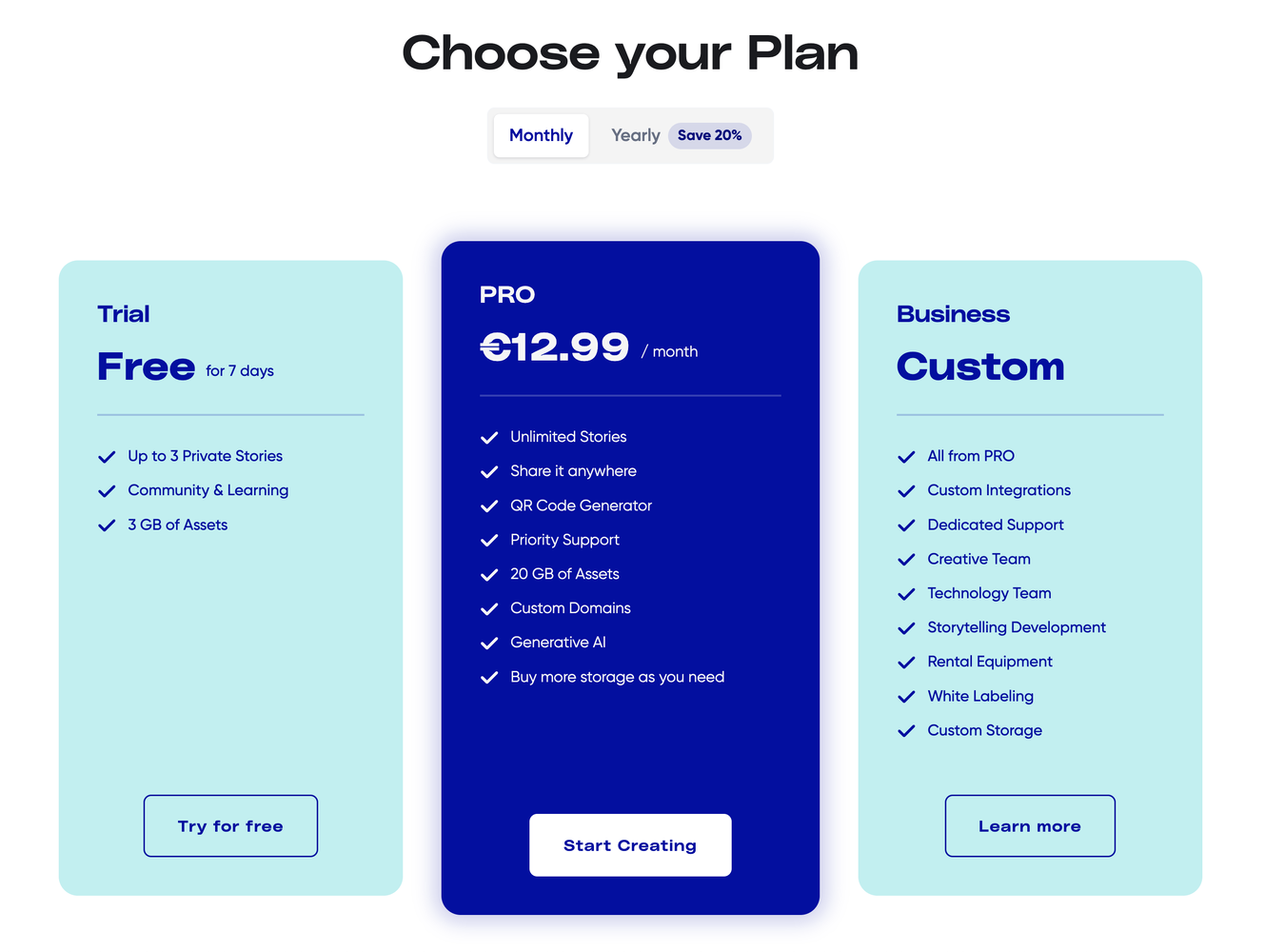
Pricing was another pain I never solved properly.
This one still hurts because I do not have a clever founder lesson to wrap around it. I just struggled with it for too long.
I never found a pricing plan that felt both sustainable for us and obviously competitive in the market. There were too many variables. More editors were launching. Some competitors went free just to grab attention, which I still think is usually a bad move because it trains the market to undervalue the category.
But whether I liked that move or not did not matter. It affected the market anyway.
So we kept adjusting. Testing. Bundling more features into the plans. Hoping perceived value would go up. Waiting for a reaction that never came strongly enough.
The worst part is that by then the product had become much broader than its original intention.
Cyango started with 360 content in mind. Over time I expanded the environments and added scene types like free world, model viewer, 360 panoramas, livestream, flat 2D, and 3D maps. Then we added more entity types: lights, 3D models, 3D text, vector images, primitive geometries, HDR images, and more.
Technically, that expansion made the platform richer. Commercially, it made the story harder.
Instead of increasing perceived value, it often made us look like yet another 3D editor. A more complete one, maybe. A more elegant one, in my obviously biased opinion. But still another editor.
That is on me. Not on the market. Not on the team. On me and on how I communicated the product.
The Painful Realization
It took me too long to admit something very simple. I was not solving one problem clearly enough.
I was building beautiful, exciting things. Things that made me curious. Things that made me proud. Things that felt technically and creatively alive. But many of those things were exciting mostly to me.
That is the trap!
When you are a product-minded founder, especially a technical one, you can confuse your own fascination with market demand. You start believing that if something is elegant enough, flexible enough, immersive enough, eventually the world will organize itself around it.
Sometimes that happens. Most of the time, it doesn't.
The market does not reward effort. It does not reward complexity. It does not reward how many features you shipped while sleeping badly for three years.
It rewards clear pain relief. And for too long, I was not doing that.
I was making beautiful and exciting things for myself, then trying to reverse-engineer a market around them.
This article is not me pretending I finally solved everything. It is just me being honest about one of the longest lessons of my founder life.
Marketing was my weakest point, yes.
But the deeper problem was not marketing alone. The deeper problem was focus and clarity.
Focus in what we built. Focus in who we built it for. Focus in what problem was painful enough for someone to pay, keep paying, and tell others about.